
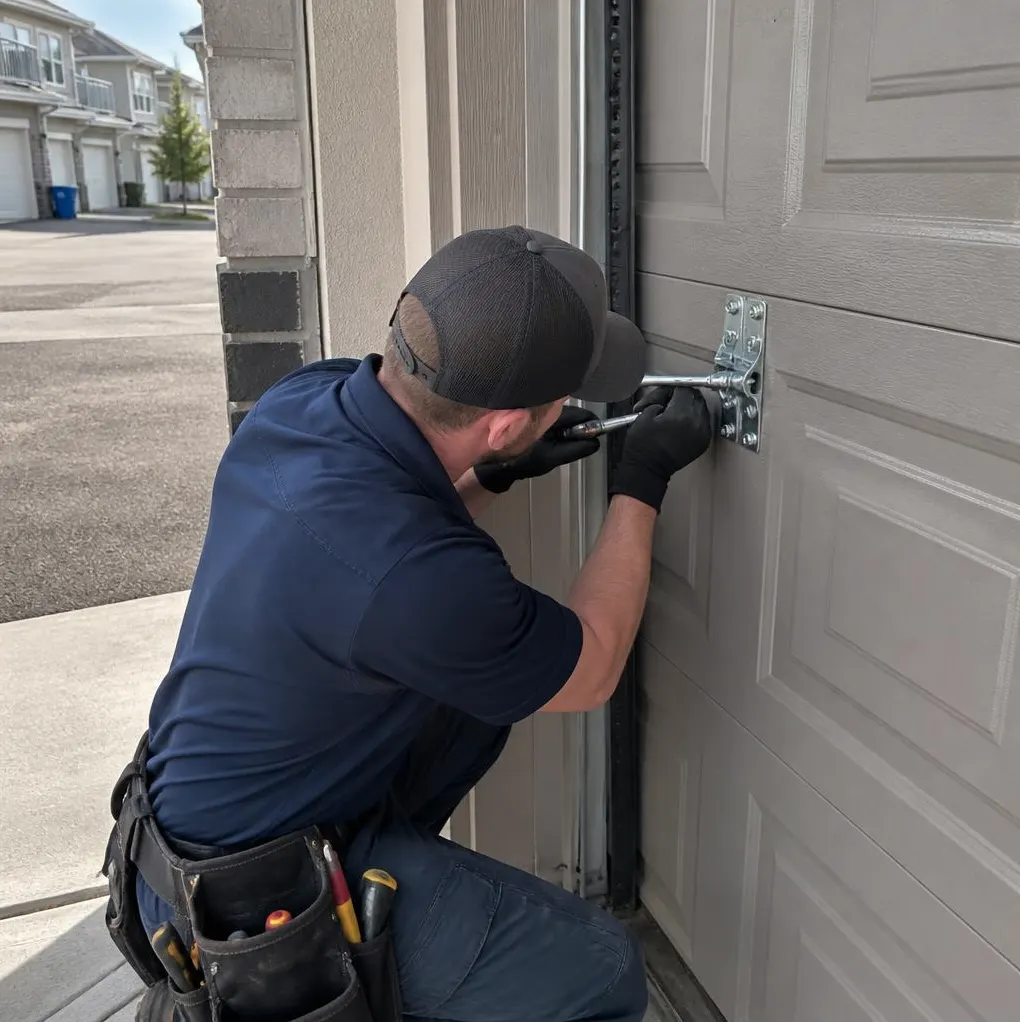
The Mistake: Treating a Warehouse Door Like a Big Residential Door
Here's the argument that starts most of these conversations: someone looks at the overhead door on a shop, warehouse, or shared garage and says, "It's basically the same thing as our garage door, just bigger." It's an easy mistake to make. Both doors sit on tracks, both lift on springs, both have an opener bolted to the ceiling. Visually, they're cousins.
But that similarity is where the resemblance ends. A residential garage door might open and close four to six times a day. A commercial or warehouse door can cycle dozens of times in a single shift — delivery trucks, forklifts, staff coming and going. That difference in workload changes almost everything about how the door is built, how it fails, and how it needs to be maintained.
How Commercial Doors Are Actually Built Differently
Once you look past the surface, the construction tells a different story:
- Heavier materials. Commercial doors often use thicker steel panels or rolling steel slats designed to take repeated impact and daily wear, not just hold back weather.
- Bigger, tougher springs. Torsion springs on commercial doors are rated for far more open-close cycles than residential springs, and larger doors often run multiple springs working together instead of just one or two.
- Commercial-grade openers. A residential opener is built for light, occasional use. Commercial openers are built with stronger motors and components meant to run continuously through a full workday without burning out.
- Reinforced tracks and hardware. Wider spans and heavier doors need tracks and rollers that can handle more stress without bending or binding.
- More safety hardware. Because commercial doors see more traffic — including vehicles and equipment — they typically carry more sensors and safety edges to prevent accidents during high-frequency use.
In short: a warehouse door isn't a residential door that got larger. It's a different piece of equipment engineered for a different job.
Why the Desert Climate Hits Them Both — Just Not Equally
Tucson's climate doesn't care whether a door is on a house or a warehouse. Both get hit with the same conditions:
- Dry heat that bakes lubricant out of rollers, hinges, and springs faster than in milder climates.
- Intense UV exposure that fades paint and dries out weatherstripping and seals.
- Monsoon dust that works its way into tracks, especially after a storm kicks up grit before the rain even hits.
- Cool desert nights that cause metal to contract after a hot day, adding stress to hardware over time.
The difference is how fast the damage shows up. A residential door might go six months between real wear and tear. A commercial door doing dozens of cycles a day in the same heat and dust is burning through lubrication, exposing hardware to grit, and stressing springs much faster — simply because it's working harder, more often, in the same brutal conditions.
What That Means for Maintenance
This is the part that actually settles the argument: commercial doors need maintenance on a tighter schedule, not because they're lower quality, but because high cycle counts accelerate everything.
- Lubrication checks should happen more frequently on commercial doors — the heat and dry air dry out grease and oil faster when the door is cycling constantly.
- Track cleaning needs to happen more often too. More open-close cycles mean more opportunities for monsoon dust to get pulled into the tracks and rollers.
- Spring inspections matter more on high-cycle doors. A spring that's rated for thousands of cycles reaches the end of its life faster on a warehouse door than on a garage door that barely moves by comparison.
- Opener checkups are non-negotiable for commercial units, since a failure mid-shift means lost productivity, not just an inconvenient walk around the house.
None of this means a homeowner needs to panic about their own garage door failing on a commercial timeline. It means the two systems simply can't share a maintenance calendar, even though they look like siblings.
When to Call Tucson Garage Door Pro
If you're dealing with a commercial or warehouse door that's cycling slow, grinding, or showing uneven movement, don't wait for a full breakdown during business hours. Our Garage Door Maintenance service is built around the real-world wear that high-cycle doors see in desert heat and monsoon dust, with inspections that catch spring fatigue and track buildup before they cause downtime. And if something does fail without warning, our Emergency Garage Door Service gets a technician out fast, because a stuck warehouse door isn't just annoying — it's lost business.
Whether it's a residential door in Oro Valley or a commercial overhead door in Marana, Sahuarita, or anywhere else around Tucson, AZ, give Tucson Garage Door Pro a call. We'll tell you straight whether you need a quick fix or a maintenance plan built for how hard your door actually works.